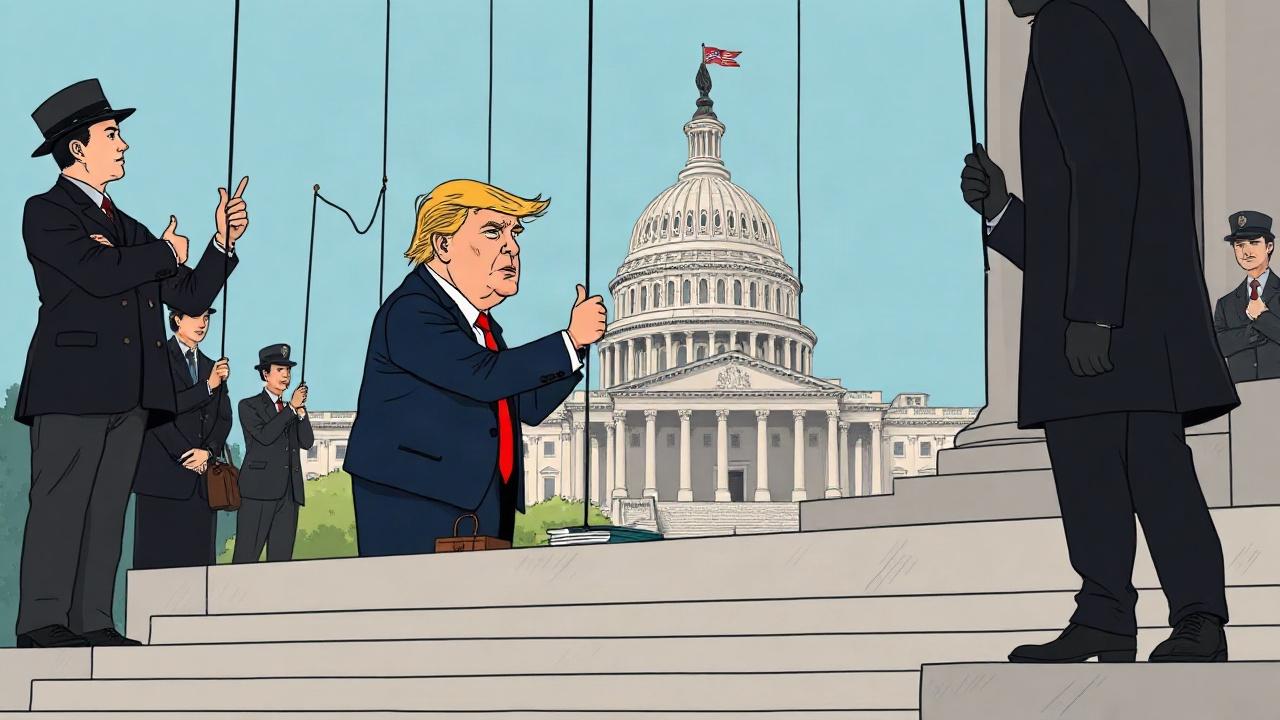
President Donald Trump signed the executive order late Friday, and it directs federal contractors and subcontractors to inform the White House about any congressional information requests and to withhold material the administration considers privileged. The order applies to all federal contractors and subcontractors, extending its reach across the government's sprawling procurement network. Companies that do not comply could lose existing contracts or be suspended from future federal work, a significant threat given how much federal business many firms depend on.
The directive also requires contractors to coordinate with the White House and federal agencies on what the order calls appropriate responses to such requests. Trump framed the order as a response to lawmakers whom the order accuses of harassing private companies to obtain confidential executive branch information. The order builds on an earlier directive from White House Counsel Will Scharf, who told federal agencies to clear employee congressional testimony with the administration first. Scharf said some Democratic investigations could cross into criminal conduct.
Democrats won control of both chambers of Congress in the midterm elections and plan to investigate the administration, as well as the Trump family's business dealings and ties to private firms. Other priorities include immigration enforcement and the administration's handling of the Jeffrey Epstein investigation. Representative Robert Garcia, Democrat of California, who is likely to lead the House Oversight Committee next year, said the probes will lay the groundwork for legislation that helps all Americans. This week, Garcia sent document preservation letters to twelve current and former officials.
The order could invite legal challenges, especially if contractors are told to withhold records sought by subpoena. Executive privilege allows presidents to protect certain internal communications, but courts can intervene in disputes over congressional oversight powers. Critics argue the order is a broader effort to shield the executive branch from oversight. Supporters say it protects confidential executive branch information and prevents harassment of private companies. The dispute is likely to test the boundaries between congressional oversight authority and executive branch confidentiality, with contractors caught in the middle of competing demands from lawmakers and the White House.
Related stories

Trump names Will Scharf White House counsel amid legal challenges
Donald Trump has officially named Will Scharf as his new White House counsel, an appointment that was publicly announced on Friday. Scharf, who presently holds ...
Trump delays AI executive order over competitive concerns
President Donald Trump's decision to postpone signing an executive order concerning artificial intelligence stemmed from his dissatisfaction with specific claus...
Trump orders federal review of childhood vaccine schedule, sparking debate.
Former President Donald Trump has issued an executive order concerning childhood vaccination recommendations, a move that has sparked considerable debate. The o...