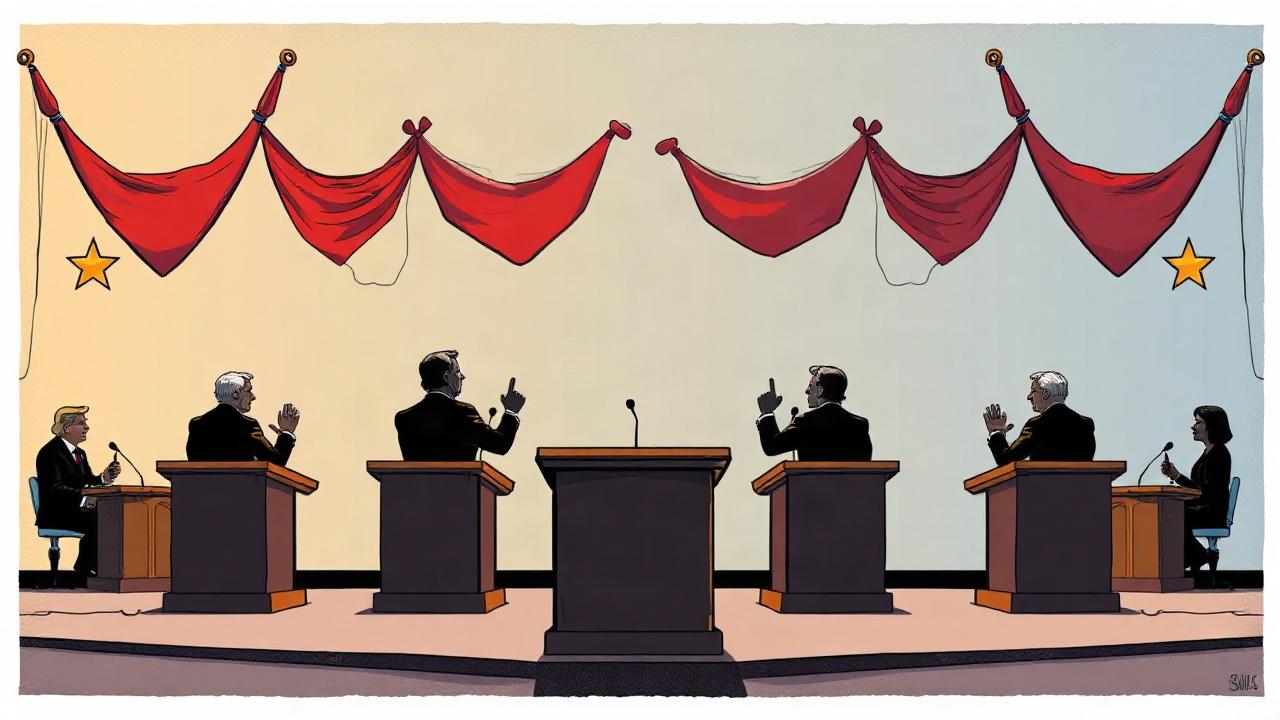
The Democratic National Committee announced on Monday that it will hold twelve debates for candidates seeking the party's presidential nomination in the 2028 election, with the events scheduled to take place next year and in 2028. The announcement sets the rules for what is expected to be a crowded primary field, and it comes as dozens of Democrats from across the party are openly considering a presidential run. Party officials say the framework is intended to manage a large field and set clear expectations for candidates before the contest intensifies.
The debate process will closely follow the rules used in the 2020 primary, the last time the party had an open contest. Each debate may be split across two nights, and no more than twenty candidates in total may qualify. The party will use criteria such as polling and grassroots fundraising to determine who makes the stage, a structure designed to reward candidates with measurable national support and broad donor networks rather than name recognition alone. Exact dates and media partners for the first two debates will be announced in January, giving campaigns a clearer timeline as they decide whether to enter the race.
The biggest change from past campaigns is a new requirement that presidential candidates sign a pledge denouncing dark money spending in the primary. Dark money refers to political spending by outside groups that do not disclose their donors. The pledge is largely symbolic because it does not have the power to stop such spending. However, it aims to attach a political cost to outside spending and unite Democratic candidates behind the party's frustration with it, signaling that those who benefit from undisclosed spending may face criticism from their rivals.
Candidates will also have to agree to other promises, as in previous cycles. They must follow the Democratic National Committee's new nominating calendar. Candidates who compete in states trying to jump ahead of the approved early-primary order could lose delegates won in every early-nominating state. The party has made that punishment harder to undo than in the past, strengthening its ability to enforce the schedule and discouraging states from disrupting the established order.
Related stories

Democrats tap South Carolina to host 2028's first presidential primary
The Democratic Party has officially designated South Carolina to host the first presidential primary election for the 2028 cycle, a significant shift in the par...
Democrats debate consistency amid sexual text allegations against candidate Platner
Recent media reports concerning congressional candidate Graham Platner have drawn significant reactions from Democratic figures, sparking a debate within the pa...
Trump Orders Federal Contractors to Clear Congressional Inquiries with White House
President Trump signed an executive order requiring federal contractors to notify the White House of congressional information requests and withhold privileged material. The move comes as Democrats prepare oversight investigations and could face legal challenges.