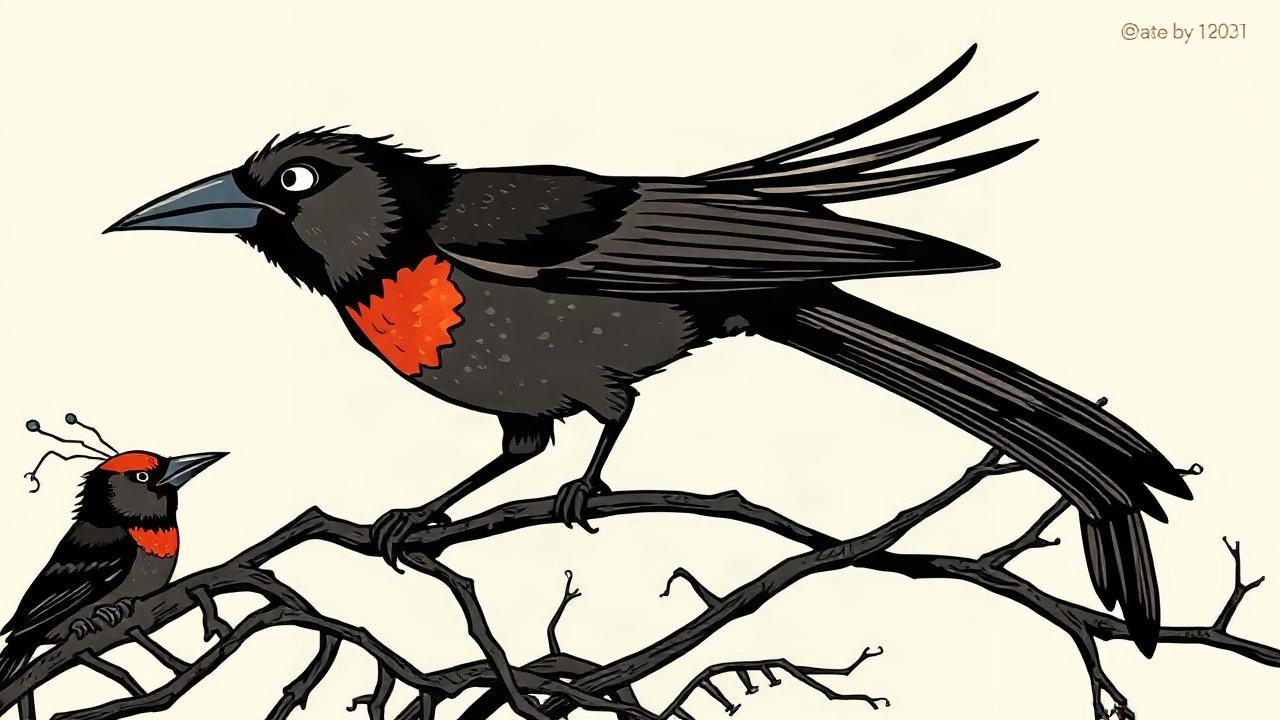
A genetic study of Darwin's tree finches has found that western large tree finches carry mostly small tree finch DNA, with one key exception tied to beak and body size. The research, published in Nature Communications, combined whole-genome sequences from hundreds of birds with measurements from museum specimens.
The team from Texas A&M College of Veterinary Medicine and Biomedical Sciences and international collaborators examined tree finches, which search for insects in forested areas of the Galápagos Islands. Much earlier work had focused on seed-eating ground finches, leaving the tree finches less studied. The new analysis shows that western large tree finches on Isabela and Fernandina islands are genetically closer to small tree finches than their distinct beaks suggest.
Scientists describe this mixture of genetic material from different ancestral lineages as a genetic mosaic. One region, known as G03, stands out. G03 is a supergene, a cluster of genes inherited as a block that affects more than one trait. In western large tree finches, this region resembles that of large tree finches, while the rest of their genome resembles that of small tree finches. The pattern likely arose when a variant linked to larger beak and body size entered a small tree finch population through interbreeding with large tree finches.
"The key here is the combination of hybridization and natural selection that results in different forms of birds," said Leif Andersson, a professor in the Department of Veterinary Integrative Biosciences at Texas A&M. Andersson compared the genome to a structure built from Lego pieces, where most pieces match the small tree finch but the piece for G03 matches the large tree finch. Beak and body size also influence mate choice, which may reduce interbreeding between the groups and help maintain two closely related populations with different physical traits and food preferences.
The findings raise questions about how these birds should be classified. Andersson said the western large tree finch could be viewed as a form of the small tree finch, a form of the large tree finch, or a distinct species. Another possibility is to treat various tree finches as different ecotypes, forms adapted to different ecological conditions, within one species. The study does not settle that debate, but it shows why appearance alone may not reveal a population's evolutionary history.
Next, the team hopes to determine how each of the four genes within G03 contributes to its effects. Researchers are examining additional data from Darwin's finches alongside comparative data from domestic chickens, which also vary in beak and body size. Understanding those individual contributions could help explain how one inherited block of DNA produces differences large enough to change how a bird makes its living.
Related stories

Galápagos Daisies Show Repeated Evolution Through Different Genes
Galápagos giant daisies have repeatedly evolved similar heat-tolerant leaf shapes using different genetic pathways, demonstrating parallel evolution.

Galápagos Daisies Show Repeated Evolution Through Different Genes
Galápagos giant daisies have repeatedly evolved similar leaf shapes for heat tolerance using different genetic tools, with new species potentially forming.

Bird Mating and Parental Behaviors Linked to Population Demographics
New research reveals that demographic factors, particularly skewed adult sex ratios, drive variations in bird mating behaviors, parental care, and sexual ornamentation.