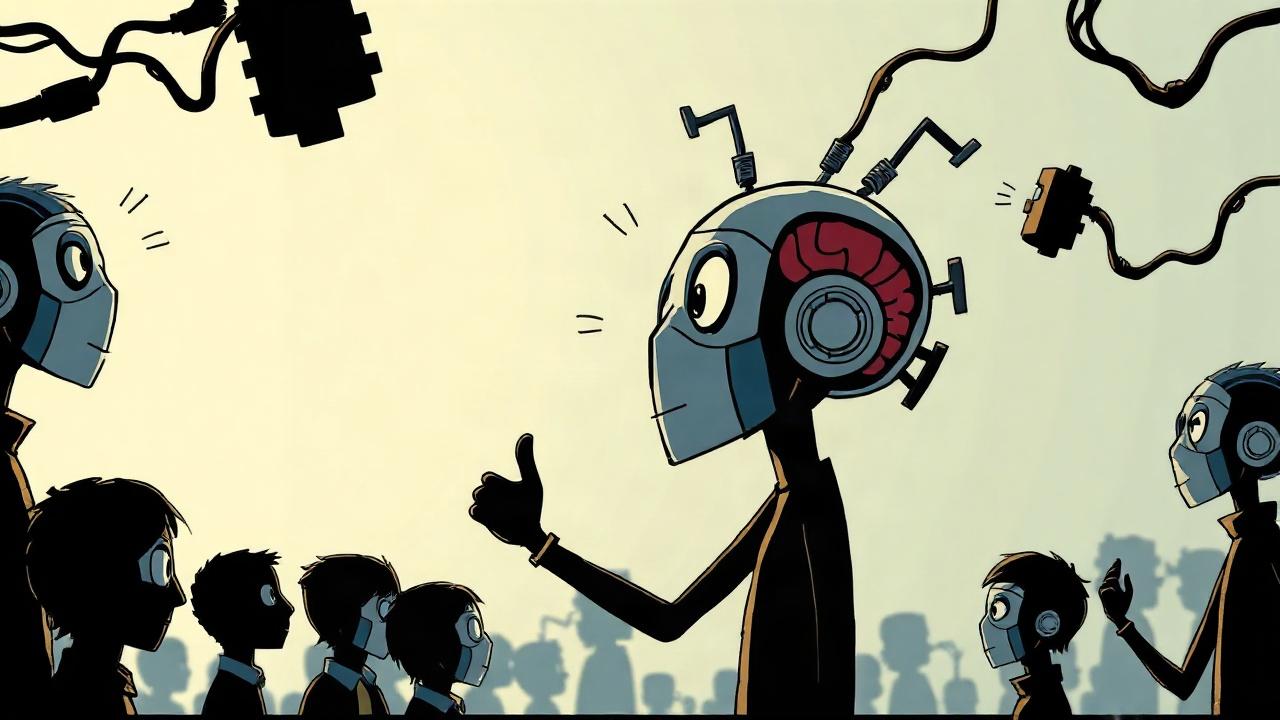
Artificial intelligence models that closely predict brain activity may rely on internal processes the brain does not use, according to a study from York University published in Nature Machine Intelligence. The finding challenges a decade of assumptions in neuroscience about how closely artificial neural networks mirror biological vision.
Researchers have long used artificial neural networks, computer systems built to recognize objects in images, as leading tools for explaining how the brain processes visual information. These models earned their value by reproducing patterns of neural activity. The York team asked whether the relationship holds in both directions. If a model truly operates like the brain, they reasoned, recorded brain activity should also predict what happens inside the model.
To test this, the team developed a method called reverse predictivity testing. They compared responses to 1,320 natural photographs and realistic synthetic images featuring ten familiar subjects, including a bear, an elephant, a face, an apple, a car, a dog, a chair, a plane, a bird, and a zebra. They added 300 more images showing the same subjects as outlines, drawings, simplified representations, and artistic interpretations.
The models predicted the responses of recorded neurons well. But the reverse failed. Those same neuronal responses were much less effective at predicting many of the models' internal features. The researchers did not see the same gap when comparing neuronal activity across different brains. Kohitij Kar, the study's senior author and a Canada Research Chair in Visual Neuroscience at York, said the results were striking and that the brain cannot equally predict many of the model's internal features.
The implications reach beyond computer vision. Artificial intelligence is increasingly used to design experiments, study human behavior, and investigate neurological and psychological conditions. If models appear accurate on the surface but operate differently underneath, researchers could draw misleading conclusions. The concern may also apply to models used to study hearing, language, and movement.
Rather than calling for abandoning these networks, the team says the findings offer a way to improve them. By identifying which features of a model correspond to real neural activity, researchers can build more reliable systems. The team released a publicly available testing toolkit so developers can evaluate their own models. Kar said the work is especially important for the lab's autism research program, which builds on models of the neurotypical brain as a baseline.
Related stories

OpenAI reports potential AI model misuse on US government websites
OpenAI, a prominent artificial intelligence research and deployment company, has recently disclosed that its advanced large language models (LLMs) may have enga...

AI Voice Cloning Technology Raises Persuasion and Fraud Concerns
New research shows AI can clone voices from short audio clips, increasing susceptibility to persuasion and raising concerns about potential fraudulent use.
College Students Note AI-Smoothed Writing Lacks Personal Voice
Canadian college students using generative AI for schoolwork report that the resulting writing often sounds strong but lacks their personal voice, raising concerns about identity and academic legitimacy.