
A trapdoor spider about the size of a quarter carries a genome roughly 50 percent larger than a human's, according to a new study from the University of California, Davis. The species, Aptostichus stephencolberti, lives in coastal dunes in Central California and was named after comedian Stephen Colbert.
The spider's genome contains 4.6 billion DNA base pairs and 52 chromosomes. Human cells typically hold 46 chromosomes arranged in 23 pairs. The findings, published in the Journal of Heredity, mark the first time scientists have sequenced the genome of a spider from this family.
A larger genome does not necessarily mean more genes. About 77 percent of this spider's genetic material consists of repetitive DNA sequences that appear many times throughout its genome. The research also found that spiders lack the conventional repetitive DNA sequences associated with telomeres, the protective structures at the ends of chromosomes. That difference may help explain why spider chromosomes appear to evolve more rapidly than those of vertebrates.
"It lends itself to broadening our understanding of spider genome composition and consequently how genomes have evolved across the animal Tree of Life," said Jason Bond, a professor in the UC Davis Department of Entomology and Nematology and the study's corresponding author.
Female trapdoor spiders spend their entire lives underground in silk-lined tunnels with hinged entrances that blend into the surrounding sand. When prey approaches, vibrations alert the spider, which bursts through the door to capture its meal. Despite their ambush hunting skills, these spiders pose no danger to humans. Among the more than 50,000 known spider species, only about 30 to 50 have venom known to be toxic to people.
The genome sequencing is part of the California Conservation Genomics project, a state-funded effort to build genomic information that can guide conservation decisions. Trapdoor spiders rarely leave their burrows, making it difficult for populations to move between habitats. Their coastal dune environments are already fragmented, and rising sea levels and invasive species pose significant threats. The species is found only along a limited stretch of coastline from the San Francisco Bay area to Monterey.
"We Californians love our beaches and trapdoor spiders share them with us," Bond said. "We're hoping to understand how things like climate change, fire and urbanization might be impacting the genetic diversity of species." Researchers also hope that understanding spider genetics will help them explore chemical compounds in spider venom, some of which have shown promise as potential painkillers or as tools for controlling agricultural pests.
Related stories
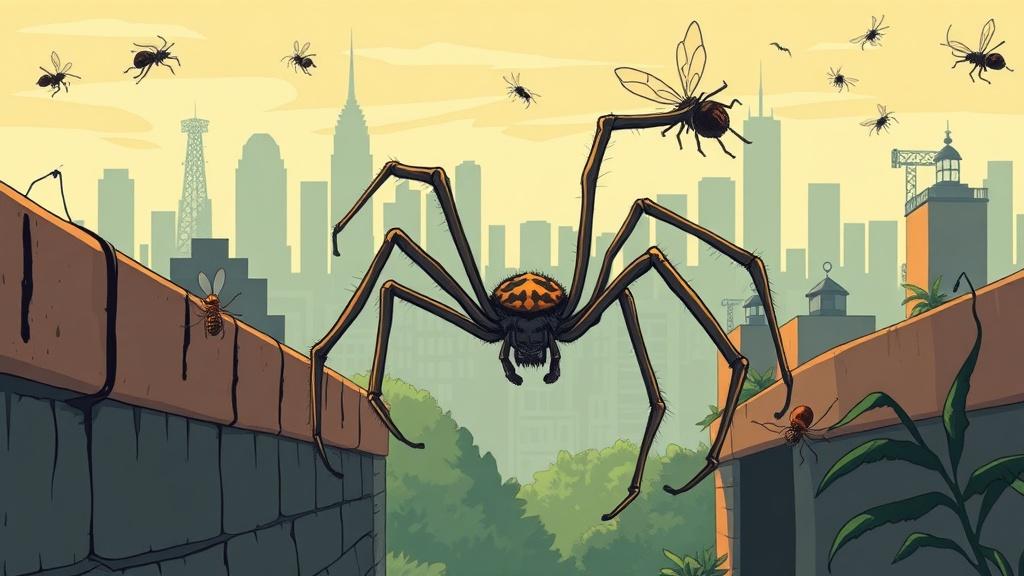
New Spider Species Discovered in Colombia Hunts Large Prey
Scientists have discovered a new spider species, *Pikelinia floydmuraria*, in Colombia that hunts prey six times its size and lives on walls, helping control urban pests.
Microscopic Organism Rewrites Genetic Code Rules
Scientists discovered a microscopic pond organism with a unique genetic code, reassigning stop signals and challenging assumptions about gene translation.

Scientists Map Full Recipe for Cancer Drug Taxol, Produce It in Tobacco
Researchers mapped the complete biological pathway for the cancer drug Taxol and used it to produce the medicine in tobacco plants.